
What Is the History and Significance of Ghungroos in Indian Classical Dance?
The gentle yet powerful sound of ghungroos is one of the most recognizable elements of Indian classical dance. These traditional ankle bells are much more than decorative accessories—they are symbols of rhythm, discipline, devotion, and the rich cultural heritage of India. Every step taken by a classical dancer is brought to life through the harmonious sound of ghungroos, creating a beautiful connection between movement and music.
From ancient temple traditions to modern dance academies, ghungroos have remained an integral part of Indian classical dance. They represent a dancer’s dedication to learning, respect for the guru, and commitment to preserving centuries-old artistic traditions.
Interestingly, ghungroos (chilanka) aren’t unique to India alone — variations of ankle bells appear in traditional dance cultures across South Asia and even parts of the Middle East, but nowhere are they as deeply woven into technique, spirituality, and pedagogy as in Indian classical dance. In India, no two dancers ghungroos sound quite the same — the pitch and tone are shaped by the metal composition, the number of bells, and the dancer’s own weight and style of striking the floor, making the sound almost like a rhythmic signature
In this blog, we’ll explore the fascinating history, cultural significance, and enduring importance of ghungroos in Indian classical dance.
What Are Ghungroos?
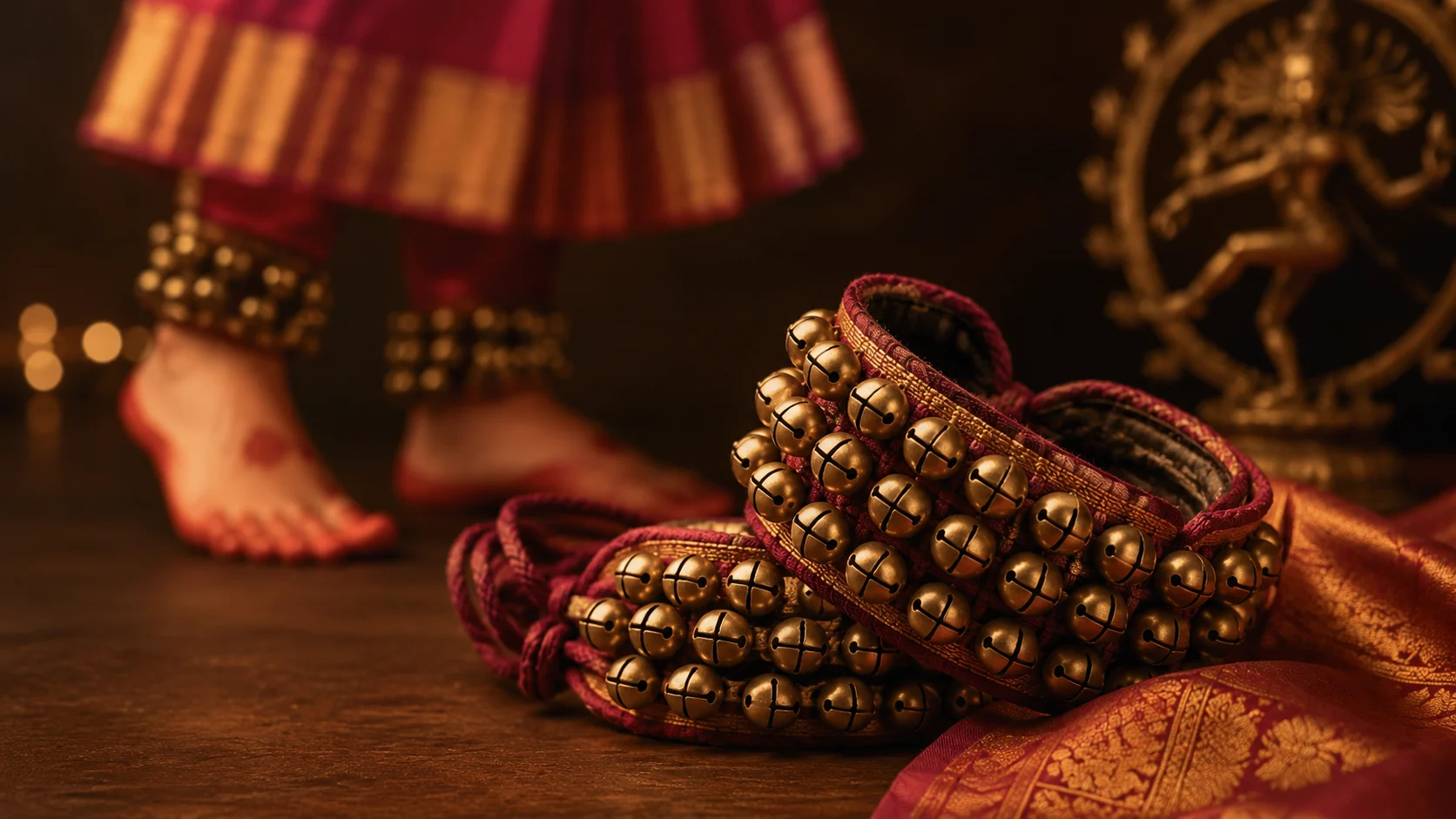
Ghungroos are strings of small metallic bells traditionally tied around a dancer’s ankles. Crafted primarily from brass or bronze, these bells produce melodious sounds that synchronize with every foot movement, helping dancers maintain rhythm and precision.
In Malayalam, these traditional dance bells are known as Chilanka, a word that evokes the distinctive rhythmic sound of classical Indian dance.
Unlike ordinary musical instruments, ghungroos become an extension of the dancer’s body. Every step, stamp, and graceful movement creates rhythmic patterns that complement the accompanying music.
Today, ghungroos are commonly used in several Indian classical dance forms, including Bharatanatyam, Kathak, Kuchipudi, Mohiniyattam, and Odissi. The word “ghungroo” itself varies by region and language — they’re called salangai in Tamil, gejje in Kannada, and ghunghru in Hindi and Urdu, reflecting how deeply the tradition is rooted across India’s linguistic landscape. Each bell (called a ghanti) is typically hollow with a small metal pellet inside, and strung together tightly on a cotton or leather cord so that the bells strike each other with every movement, rather than hanging loose.
The Fascinating History of Ghungroos
Origins in Ancient India
The origins of ghungroos can be traced back thousands of years, making them an enduring symbol of India’s rich cultural and artistic heritage. Ancient Indian sculptures, temple carvings, and classical literature depict dancers wearing ankle bells during religious ceremonies and cultural performances. Dance was considered a sacred offering to the divine, and ghungroos became an essential part of these performances.
Temple Dance Traditions
In ancient temples, dance was performed as an act of devotion rather than entertainment. Devadasis and temple dancers wore ghungroos while presenting devotional performances dedicated to Hindu deities. The rhythmic sound of the bells symbolized purity, discipline, and spiritual surrender.
Evolution Through the Centuries
As Indian classical dance evolved through different dynasties and cultural influences, ghungroos continued to play a central role. Despite changes in costumes, choreography, and performance styles, the importance of ghungroos has remained unchanged, preserving the authenticity of India’s performing arts.
The Symbolic Meaning of Ghungroos
Ghungroos hold deep symbolic value beyond their musical function.
For many dancers, tying ghungroos (Chilanka) before practice or performance is a sacred ritual. It signifies readiness, respect for the art form, and a commitment to disciplined learning.
Ghungroos also symbolize:
- Dedication to years of rigorous training
- Respect for the guru (teacher)
- Humility before the art
- Connection between body, rhythm, and spirituality
- Preservation of India’s cultural heritage
Why Are Ghungroos Essential in Indian Classical Dance?
Maintaining Rhythm
Indian classical dance is deeply rooted in Tala (rhythm). Ghungroos help dancers hear every foot movement clearly, making it easier to stay synchronized with the accompanying music.
Perfecting Footwork
Dance forms like Bharatanatyam and Kathak involve intricate footwork. Ghungroos provide instant auditory feedback, allowing dancers to improve accuracy and timing.
Enhancing Performances
The rhythmic sound of ankle bells adds depth and energy to every performance, making the dance more engaging for audiences.
Building Coordination
Ghungroos help dancers coordinate hand gestures, facial expressions, body movements, and footwork into one seamless performance.
Building Discipline and Focus
Practicing with ghungroos requires sustained concentration, since even a slightly uneven step produces an audible, uneven sound. This makes them a natural discipline-building tool — dancers quickly learn that consistency, control, and patience are non-negotiable parts of the training process, well beyond just the physical steps.
Ghungroos Across Different Indian Classical Dance Forms
Bharatanatyam
In Bharatanatyam, ghungroos emphasize precise footwork performed during Adavus. Every beat complements the expressive storytelling and geometric body movements that define this dance form.
Kathak
Kathak dancers often wear heavier ghungroos with a larger number of bells. Since Kathak focuses extensively on rhythmic footwork and fast spins, the bells become an essential musical component of the performance.
Kuchipudi
Kuchipudi combines graceful movements with dramatic storytelling. Ghungroos enhance the rhythm while supporting expressive performances based on mythology and devotion.
Mohiniyattam
Known for its gentle and graceful movements, Mohiniyattam uses ghungroos to create subtle rhythmic patterns that beautifully complement the flowing style of the dance.
Odissi
Odissi dancers use ghungroos to synchronize elegant footwork with traditional Odissi music, adding richness and harmony to their performances.
The Ghungroo Ceremony: A Milestone in Every Dancer’s Journey
Receiving the first pair of ghungroos is one of the most memorable moments in a classical dancer’s life.
Many dance academies conduct a special Ghungroo Ceremony, (Chilanga Pooja) where the guru formally presents the ankle bells to students who have demonstrated dedication, discipline, and readiness for advanced training.
The ceremony symbolizes:
- Commitment to classical dance
- Blessings from the guru
- Entry into a deeper stage of learning
- Respect for tradition and culture
For many students, this occasion marks the beginning of a lifelong journey in dance.
How Many Ghungroos Does a Dancer Wear?
The number of bells depends on the dancer’s experience and dance style.
- Beginners: Usually wear 25–50 bells on each ankle.
- Intermediate Students: Typically wear 50–75 bells.
- Advanced Dancers: Often use 100–200 or more bells for richer sound and greater rhythmic expression.
The weight and number of bells are chosen based on comfort, technique, and performance requirements.
What Are the Benefits of Practising with Ghungroos (Chilanka)?
Practicing with ghungroos offers several advantages that go far beyond producing beautiful sounds. Here are some of the key benefits every dancer experiences over time:
Improves Rhythm
Ghungroos train the ear as much as the feet. With every step producing an audible beat, students develop a much stronger internal sense of musical timing, tala, and rhythm than they would through silent practice alone.
Enhances Footwork Precision
Since every movement produces instant auditory feedback, dancers can immediately hear when a step is off-beat or uneven. This makes it easier to correct mistakes in real time and steadily improve accuracy.
Builds Strength
The added weight of the bells, combined with repeated stamping and rhythmic movement, helps strengthen the ankles, calves, and legs, while also building the stamina needed for longer performances.
Improves Coordination
Dancing with ghungroos requires the hands, facial expressions, body posture, and footwork to move in sync with the rhythm the bells create — helping students develop whole-body coordination.
Builds Discipline and Focus
Because even small inconsistencies in footwork are immediately audible, dancers naturally develop sharper concentration and body awareness — habits that often carry over into other areas of life as well.
Boosts Confidence
As dancers grow comfortable with the sound and weight of their ghungroos, they perform with greater assurance, allowing their technique and expression to come through more confidently on stage.
What Makes a Ghungroo Right for You?
Selecting the right pair is essential for comfortable and effective practice.
Consider:
- Number of bells
- Weight suitable for your experience level
- High-quality brass bells for clear sound
- Strong cotton or leather straps
- Comfortable fit around the ankles
Beginners should always seek guidance from their dance teacher before purchasing ghungroos
Caring for Your Ghungroos
Proper care helps preserve both the sound quality and lifespan of ghungroos.
Here are some simple maintenance tips:
- Store them in a dry cloth bag.
- Avoid exposure to moisture.
- Clean the bells occasionally with a soft cloth.
- Untie them carefully after practice.
- Keep them away from damp environments to prevent corrosion.
With proper care, a good pair of ghungroos can last for many years.
Common Myths About Ghungroos
Myth 1: More bells make you a better dancer.
Skill comes from dedicated practice, not the number of bells.
Myth 2: Ghungroos are only decorative.
They are essential tools for rhythm, balance, and technique.
Myth 3: Beginners should not wear ghungroos.
Students usually begin wearing lighter ghungroos once they have learned basic footwork under the guidance of their guru.
Myth 4: Heavy ghungroos produce better performances.
The ideal weight depends on the dancer’s experience, comfort, and dance style.
Myth 5: All ghungroo bells sound the same.
Sound quality varies based on the metal, casting method, and craftsmanship. Well-made brass bells create a clear, resonant tone, while lower-quality alloys may sound dull or tinny.
Frequently Asked Questions (FAQs)
1.At what age can a child start wearing ghungroos?
Usually after 1–2 years of basic training, depending on the child’s progress rather than age.
2.Can ghungroos be worn everyday during practice?
Yes. Regular practice helps build rhythm, strength, and muscle memory.
3.Are ghungroos different for each classical dance style?
Yes. Their weight, number of bells, and sound vary by dance form.
4.Can ghungroos be resized or restrung later?
Yes. More bells or a new cord can be added as the dancer progresses.
5.Why do some ghungroos sound better than others?
The metal and casting quality affect the sound. Good brass bells produce a clearer, richer tone.
Ghungroos in Modern Dance Education
Despite the growth of modern teaching methods and online learning, ghungroos continue to hold an important place in classical dance education. They help students develop rhythm, coordination, balance, and precision while allowing them to hear and refine the sound of their footwork.
For students learning Bharatanatyam, practising with ghungroos is an important part of developing a strong connection between movement, rhythm, and music. The familiar sound of the bells gradually becomes part of a dancer’s practice, from basic steps to more advanced performances.
From traditional dance schools to modern dance education, ghungroos continue to preserve the connection between disciplined training and India’s rich classical dance heritage.
Learn Bharatanatyam at Bharathanjali
Understanding the history and significance of ghungroos is an important part of learning Indian classical dance. At Bharathanjali Dance Academy, students are guided through every stage of their Bharatanatyam journey, from mastering basic Adavus to wearing ghungroos with confidence and understanding their cultural significance.
As a dedicated classical dance institute, they focus on rhythm, technique, expression, and traditional practices to help students build a strong foundation in this timeless art form. Through structured Bharatanatyam classes, experienced instructors support students in developing their skills while preserving the authenticity and cultural heritage of the dance. Whether you are a beginner or looking to refine your existing skills, Bharathanjali provides a supportive environment for dancers of all ages.
Conclusion
Ghungroos are far more than traditional ankle bells—they are symbols of India’s rich artistic heritage, spiritual devotion, and disciplined learning. Their rhythmic sound transforms every movement into a meaningful expression of music, culture, and storytelling.
Whether worn by a beginner taking their first dance steps or an accomplished performer captivating audiences worldwide, ghungroos continue to embody the timeless beauty of Indian classical dance. By preserving this cherished tradition, dancers carry forward a legacy that has inspired generations and will continue to resonate for years to come.